BlueNose’s Léon Grillet on Innovation, Impact, and What Comes Next
Innovation in shipping doesn’t happen overnight. It takes vision, technical excellence, and the courage to rethink what’s possible. BlueNose, a London-based company at the forefront of maritime transformation, embodies all three. Combining deep engineering expertise with a commitment to climate impact, they are helping shape a low-carbon future for the industry.
This vision was recently recognised with the approval of funding through the UK Government’s Clean Maritime Demonstration Competition (CMDC6) for Project WAVE (Wind Deflector Aerodynamics for Vessel Efficiency), developed in collaboration with lomarlabs. Project WAVE will study the feasibility of an innovative aerodynamic technology designed to improve ships’ fluid dynamics, lower fuel consumption, and reduce pollutants like SOx and NOx. Beyond the environmental benefits, the project will also support UK-based skills development, student placements, and best-practice EDI in maritime innovation.
At lomarlabs, we’re proud to collaborate with pioneers like BlueNose, startups that challenge convention and push maritime innovation from concept to reality. We caught up with the team to explore their journey, their technology, and what’s next on the horizon.
Q
What inspired the founding of BlueNose, and what maritime challenges are you most passionate about solving?
LG: We founded BlueNose at the intersection of advanced engineering and positive environmental impact, driven by a vision to reduce maritime emissions by rethinking ships’ aerodynamics. As engineers and lifelong ocean enthusiasts, we saw an opportunity to tackle shipping’s massive carbon footprint. Air drag on a vessel, especially on a container ship’s stacked cargo, was an overlooked challenge we knew we could address.
That mission has now been further validated with the recent approval of Project WAVE, under the UK Government’s Clean Maritime Demonstration Competition (CMDC6), a collaboration with lomarlabs. While still at the feasibility stage, it marks an important milestone — recognition that aerodynamic innovation has the potential to cut emissions, reduce operating costs, and support the wider maritime sector.
Our passion is solving exactly these kinds of hard maritime problems: cutting fuel consumption, lowering emissions, and making shipping cleaner and more efficient without waiting decades for new fuels or radical ship redesigns.
Q
How does BlueNose’s technology differ from traditional aerodynamic optimisation solutions in the industry?
LG: Our technology stands apart from traditional solutions in several ways. We designed BlueNose for easy adoption: thanks to our patent pending modular elements our deflector structures can be installed during routine port calls (no special drydock needed), making upgrades faster and cheaper. Critically, our solution is adaptive it adjusts to changes of operational conditions (like container stack height, or to provide access when needed for example) to maximise efficiency at all times . Combined with AI-driven shape optimisation and advanced lightweight recyclable composite polymer materials, these factors make BlueNose’s approach uniquely more effective, more durable and more sustainable compared to traditional aerodynamic optimisation solutions.
Q
The maritime sector is under increasing pressure to decarbonise. How is BlueNose contributing to this transition?
LG: BlueNose is directly helping decarbonise shipping by turning better aerodynamics into immediate emissions savings. Each ship we retrofit can reduce fuel consumption by up to 5% in best case scenarios, which translates to significantly lower CO2 emissions. That may sound modest, but scaled across the industry it’s massive: if applied on all active container ships, our solution could eliminate about 11 million tonnes of CO2 per year equivalent to removing 2.4 million cars from the road or 523 million trees planted and growing for a year. These efficiency gains let shipowners shrink their carbon footprint today, without waiting for new fuels. By improving vessels’ energy efficiency, we also help them meet tightening decarbonisation rules (like the IMO’s Carbon Intensity Indicator) and avoid carbon taxes. In short, we provide a practical, quick to deploy, low risk, high-impact tool that takes the maritime sector closer to its transition goals now.
Q
Can you share a recent breakthrough, pilot project, or success story that captures BlueNose’s mission in action?
LG: One exciting milestone is of course our collaboration with lomarlabs to prepare our first at-sea pilot deployment. After extensive simulations and small-scale prototype tests, we’re now gearing up to install our AI-designed wind deflector on a commercial vessel a real-world trial that puts our mission into action. This pilot will demonstrate how our aerodynamic retrofit cuts fuel use and emissions under actual operating conditions. It’s the culmination of a recent breakthrough: our algorithmically optimised wind deflector structure proved highly effective in reducing drag during testing, giving us the confidence to move to open-ocean validation. Another proud moment was winning the prestigious Terra Carta Design Lab competition, which underscored the global significance of our sustainable shipping innovation.
Q
How do collaborations with organisations like lomarlabs help accelerate BlueNose's impact?
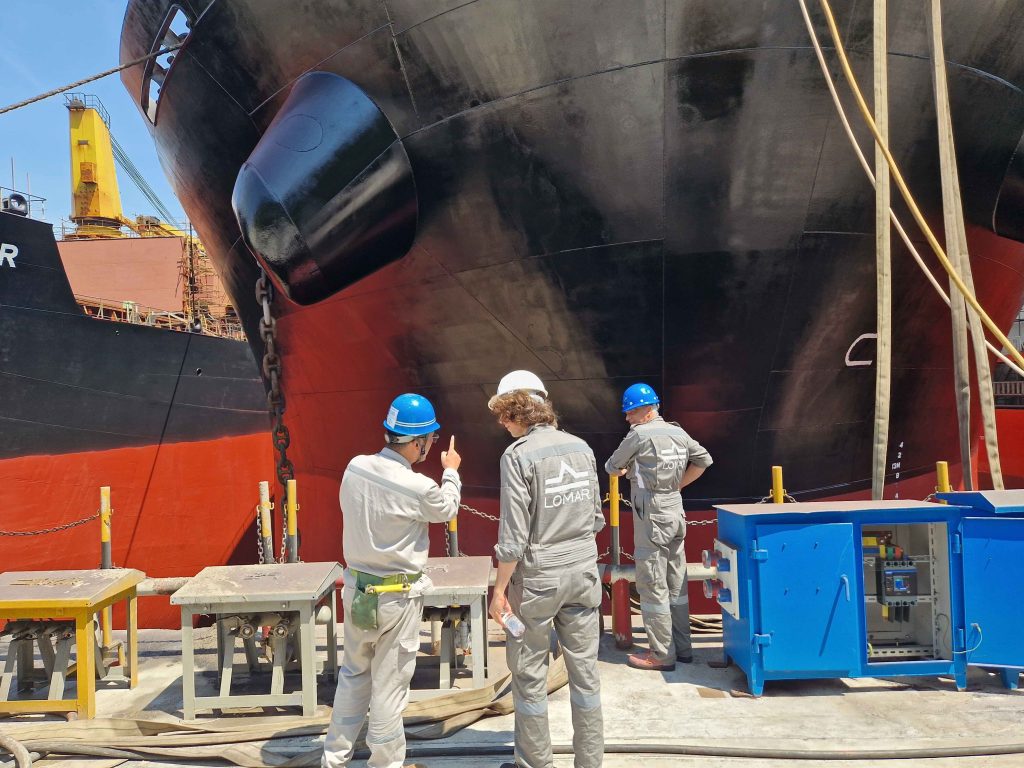
LG: Collaborations with organisations like lomarlabs are game-changers for us. Beyond support, they provide strategic industry access and validation. For instance, lomarlabs has helped fast-track our journey from lab to sea: their team is eager to deploy our AI-designed, lightweight structures on vessels, seeing them as new standards for efficiency improvement. That kind of endorsement builds credibility with shipowners. Lomar’s support also gives us hands-on learning opportunities we even joined Lomar’s newbuild projects team in China to understand retrofitting challenges first-hand. This insight ensures our solution fits real operational needs. In short, collaborations accelerate our impact by combining our deep-tech innovation with practical know-how, providing testbed vessels and networks. It means we can implement faster, learn faster, and scale our emissions-cutting technology more effectively.
Q
Sustainability often means balancing ambition with reality. How does BlueNose stay practical while pushing for pioneering change?
LG: We push boundaries while staying pragmatic. One way is by using proven materials and methods in new ways. Our aerodynamic add-ons use materials already common (and certified) in shipbuilding, just applied innovatively. This means we don’t face major certification hurdles or supply chain surprises; we are not reinventing the wheel, this is an ambitious idea made realistic. We also design for minimal operational disruption: our solution can be installed during a normal maintenance stop, and it doesn’t interfere with a vessel’s existing fuel systems. That practicality encourages adoption. We rigorously test each innovation in stages (simulations, scale models, field trials) to ensure it works in the real world before scaling up. And by focusing on achievable gains like a up to 5% efficiency boost with about a 2-year payback we prove that sustainability and business viability can go hand-in-hand.
Q
If you could send one message to the next generation of maritime innovators, what would it be?
LG: Go for it! The industry needs you. It needs bold innovators. Our journey shows that even a student project can grow into a solution shaping the industry’s sustainable future. Shipping may be a quite prudent and traditional sector, but right now it’s hungry for fresh ideas as it faces the climate challenge. So don’t be afraid to bring your passion for technology and sustainability into this field. Combine ingenuity with persistence: test your ideas, seek mentorship, and iterate constantly. We need pioneering spirits willing to rethink old problems like fuel inefficiency. By acting now, you can ride the movement of change sweeping through maritime industry. This is the moment. It’s no coincidence that lomarlabs was created less than three years ago. In short, be courageous and practical, if your idea can cut emissions or improve efficiency, the industry is ready to listen, and you can truly make waves. Pun absolutely intended.
Q
What have been some of the biggest lessons learned in bringing your innovation from concept to application?
LG: We’ve learned that moving from concept to application requires equal parts innovation and validation. One big lesson is to test and iterate relentlessly. We started with high-fidelity simulations (CFD models) and even collaborated with fluid dynamics experts to refine our algorithms, but we also had to build physical small-scale prototypes to prove they work. Another lesson is the importance of early collaboration with industry and regulators we engaged with shipowners and classification societies from the start to inform our design choices. Finally, we learned to surround ourselves with a strong ecosystem of mentors and partners. Deeptech innovation is a team sport, and their guidance helped turn our bold concept into a viable, ship-ready solution.
Q
What role does real-world testing and feedback from seafarers play in shaping your technology?
LG: Real-world testing and seafarer feedback are critical to our design process. We can simulate performance on computers all day, but nothing beats feedback from the people who will actually sail with our technology. Early on, we sought input from ship operators and technical teams in the field, and even visited active shipyards to understand on-the-ground challenges firsthand. Those experiences highlighted practical details (like installation constraints and maintenance needs) that accelerated our roadmap as we spotted them early on in our technological roadmap. As we move into pilot trials, we’ll work closely with crews to monitor how our wind-deflector performs at sea and how it affects day-to-day operations. Their insights will directly shape any tweaks or improvements. In short, seafarer feedback is the compass guiding us from a promising prototype to a truly ship-proof solution that crews and ship owners trust and use with confidence.
Q
What does success look like for BlueNose in the next 3–5 years?
LG: In 3 to 5 years, success for BlueNose means seeing our technology making a real dent in shipping’s emissions. We aim to have a significant number of vessels across major fleets retrofitted with our aerodynamic structures, collectively saving millions of tonnes of CO2 annually. We want our wind-deflector solutions to become a new industry standard an expected feature on container ships and beyond. In fact, we’re already eyeing other vessel types where our tech can have impact, expanding our reach from around 5,500 container ships to a total addressable market of about 20,000 vessels worldwide. Internally, success also means growing our team and continuing to innovate, while staying aligned with our mission, values and commitments. Above anything else, keeping our original fire lit and passion still burning. Ultimately, if in five years shipping companies view aerodynamic retrofits as a “must-have” for efficiency and decarbonisation, we’ll know we’ve succeeded.
London, 14 January, 2026 – lomarlabs, the venture catalyst advancing deep-tech solutions for maritime, and Signal Fusion, the human-performance intelligence company, are to work together to
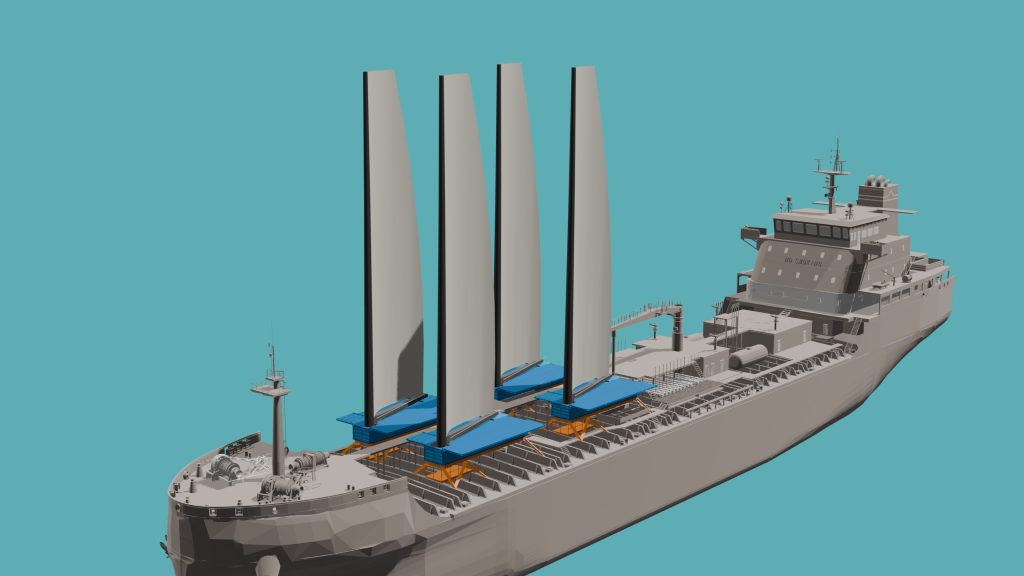
London, 9 December 2025– lomarlabs, the venture catalyst created by Lomar, announced it is collaborating with Advanced Wing Systems to advance the adaptation of proven sail technology into a
London, 18 November, 2025 – BlueNose, a London-based maritime innovation startup, has been awarded £350,000 through the UK Government’s Clean Maritime Demonstration Competition (CMDC6) to
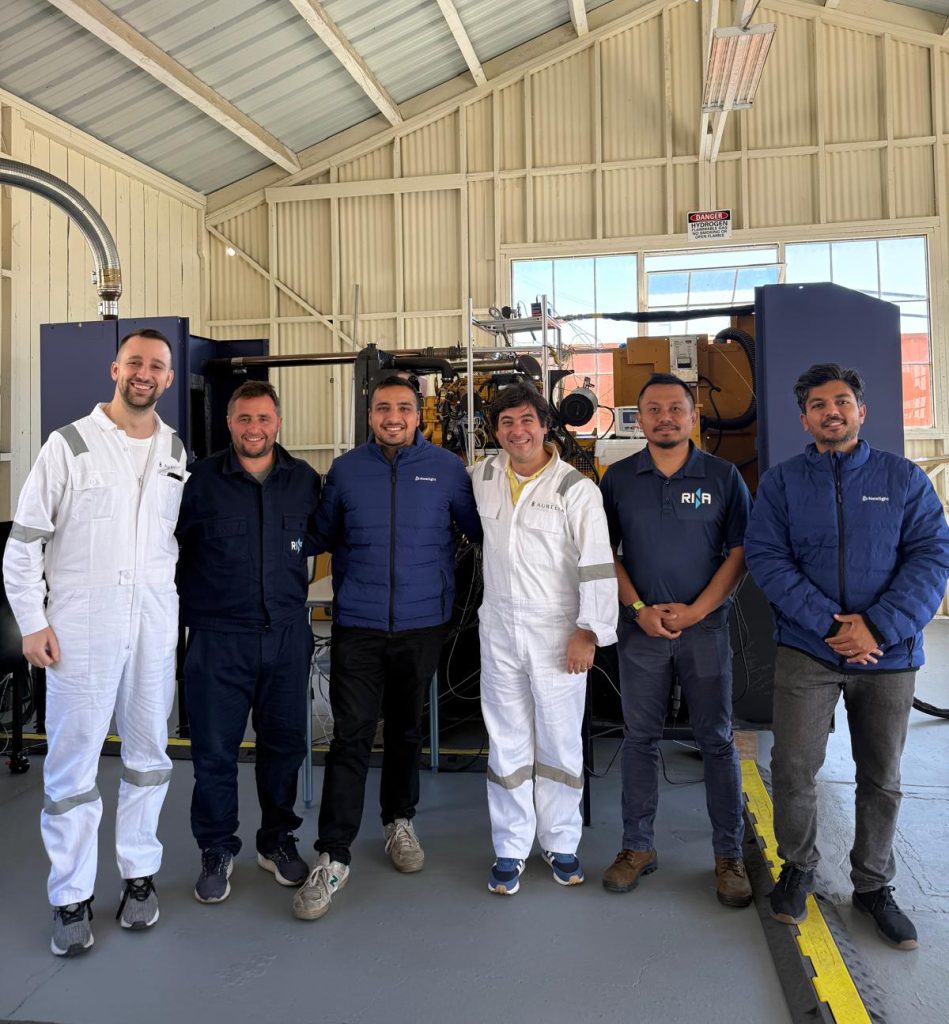
San Francisco, CA – November 3, 2025, Newlight today announced the successful completion of Factory Acceptance Testing (FAT) for its hydrogen retrofit package for two- and four-stroke main engines
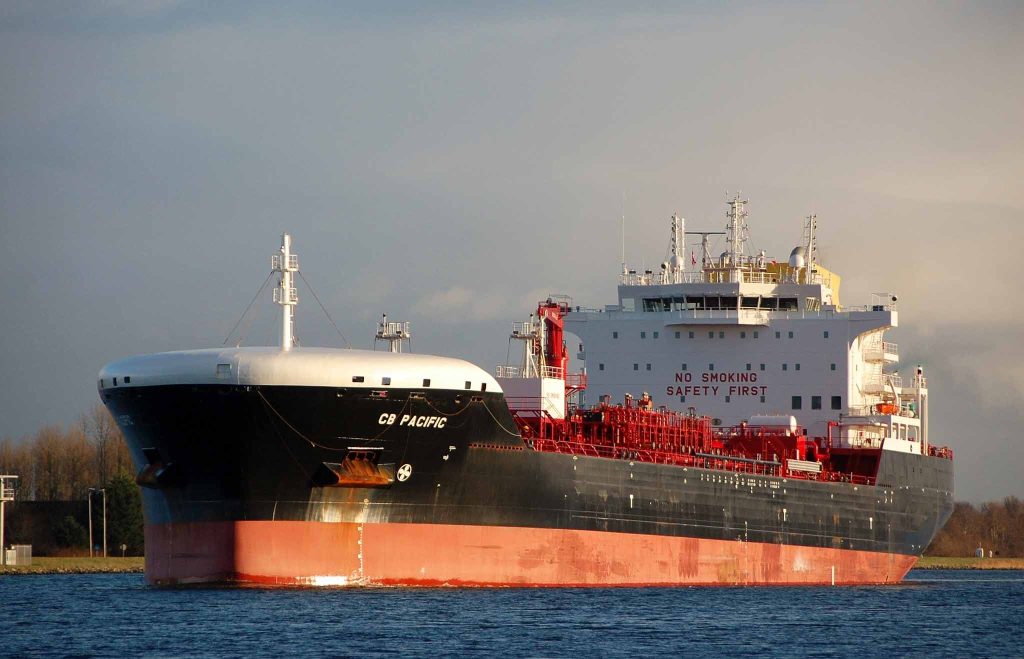
London – 2 September, 2025 — Mythos AI, a leader in AI-driven marine autonomy systems, has completed the installation of its Advanced Pilot Assistance System (APAS) aboard the CB Pacific, a
A Consortium to Redefine Port Operations Our portfolio company Seabound has secured £1.1 million through the UK Government’s Clean Maritime Demonstration Competition (CMDC6) to pioneer the
London, U.K. — August 20, 2025 — Seabound, a UK-based leader in marine carbon capture, is proud to announce an award of £1.1 million through Round 6 of the UK Government’s Clean Maritime
The Oslo Maritime Venture Financing Forum On June 4th, a signal was sent from the Oslo Stock Exchange: maritime tech is no longer on the fringe of venture—it’s starting to chart the course. At
London, 28 May 2025 – Lomar’s corporate venture lab, lomarlabs, is collaborating with BlueNose, a pioneering maritime technology company, to optimise ship aerodynamics through AI-assisted design